
Join Today, It's Free!
MEMBER BENEFITS INCLUDE:
- FREE Giveaways
- Members' Only Content
- Email Alerts for New Deals & Freebies
- Input on New Site Features
 |
| 1. Click on settings in the top right menu. 2. Click on your Account Settings in the middle of the screen. 3. Click the link for the Forum Digest. 4. Select any Forum Daily Digests you want to receive. |


Recently Active Members


TL; DR Version
Let’s be clear: influencer “reviews” are compensated ads. Journalists and real users provide better insight without that bias. LinkedMusicians built two PowerSEARCH tools — one for journalist‑only reviews, one for forums + subreddits — to help producers research gear without the bias.
Estimated time to read: 4-5 minutes
In 2026, two trends dominate brand marketing: (1) AI (it’s everywhere), and (2) influencer marketing and budgets are growing rapidly.
Influencer marketing has exploded across every industry, and the latest studies are revealing that paying influencers is a substantial and increasing portion of companies marketing promotion budgets. I’d estimate that the audio production world commits a significantly higher percentage of its total marketing budget to influencer marketing — and paying influencers — than most industries.
And yes — that includes the “reviewers” you see on YouTube, TikTok, Instagram, Facebook, and even niche audio production channels. A decade ago, top influencers in this space were already charging $15,000 or more for a single sponsored “review” video about a new plugin or sample library. Today, the numbers are even higher.
Here’s the part many music producers still underestimate:
Influencers are not reviewers. Even influencers with a small number of followers get free product, financial contributions, and commonly attempt to get a foot in the door to do paid content for the brands they “review.” They are truly compensated, independent sales promotion contractors, they are just more deceptive about how they do their pitch (there’s a common thread through influencer “review” videos that begins with assuring the viewer that they’re honest and unbiased, making a non-dealbreaker criticism, and then providing the affiliate links; almost all follow the same template and almost none of them follow country regulations or laws for influencer marketing, which in the US require upfront disclosures for any free product received, any form of compensation, any relationships with the brand being represented, etc.).
Now, all of that doesn’t mean that there isn’t value to many influencer videos. Many influencers are talented and entertaining and can communicate product features well. They give us the opportunity to hear and see products in action and their content can be genuinely helpful. But their opinions and their bias should be put in the proper perspective. Their income depends on the companies whose products they “review,” which means their content is inherently biased. Real journalists can’t accept money or free gear from the companies they cover. Influencers can — and do.
Even more concerning, some developer‑affiliated contractors quietly post “user opinions” on forums, hyping up products for the developers they work for and may make royalties on without disclosing their relationship with the brand. It’s a subtle form of astroturfing, and it misleads musicians who are trying to make informed decisions.
So how do you protect yourself?
Have your research process be founded on credible, non-influencer sources, like journalist reviews and trusted non-compensated, long-standing community members with good reputations.
How to Protect Yourself From Biased or Manipulated Information
1. Prioritize real journalism over influencer content
Professional reviewers at outlets like Sound on Sound, Mix, TapeOp, FutureMusic, and MusicTech operate under editorial standards. Their job is to inform, not promote.
2. Evaluate the poster, not just the post
Before trusting a forum comment or Reddit thread:
- Check the poster’s history
- Look for patterns of brand advocacy
- Consider whether they might have undisclosed affiliations
3. Pay attention to how communities handle dissent
Developer‑owned or developer‑moderated communities often drift toward a single “approved” narrative.
If negative experiences get censored or dog‑piled, that’s a red flag.
Why Not Just Ask AI?
AI can be helpful, but it’s only as good as the sources it pulls from. And right now, Google’s algorithm heavily boosts influencer content. That means AI models often ingest and repeat the same biased material you’re trying to avoid.
To get credible insights from AI, you’d have to:
- Write prompts that exclude biased sources
- Hope the model can reliably identify conflicts of interest
But the bottom line is, that’s not realistic today.
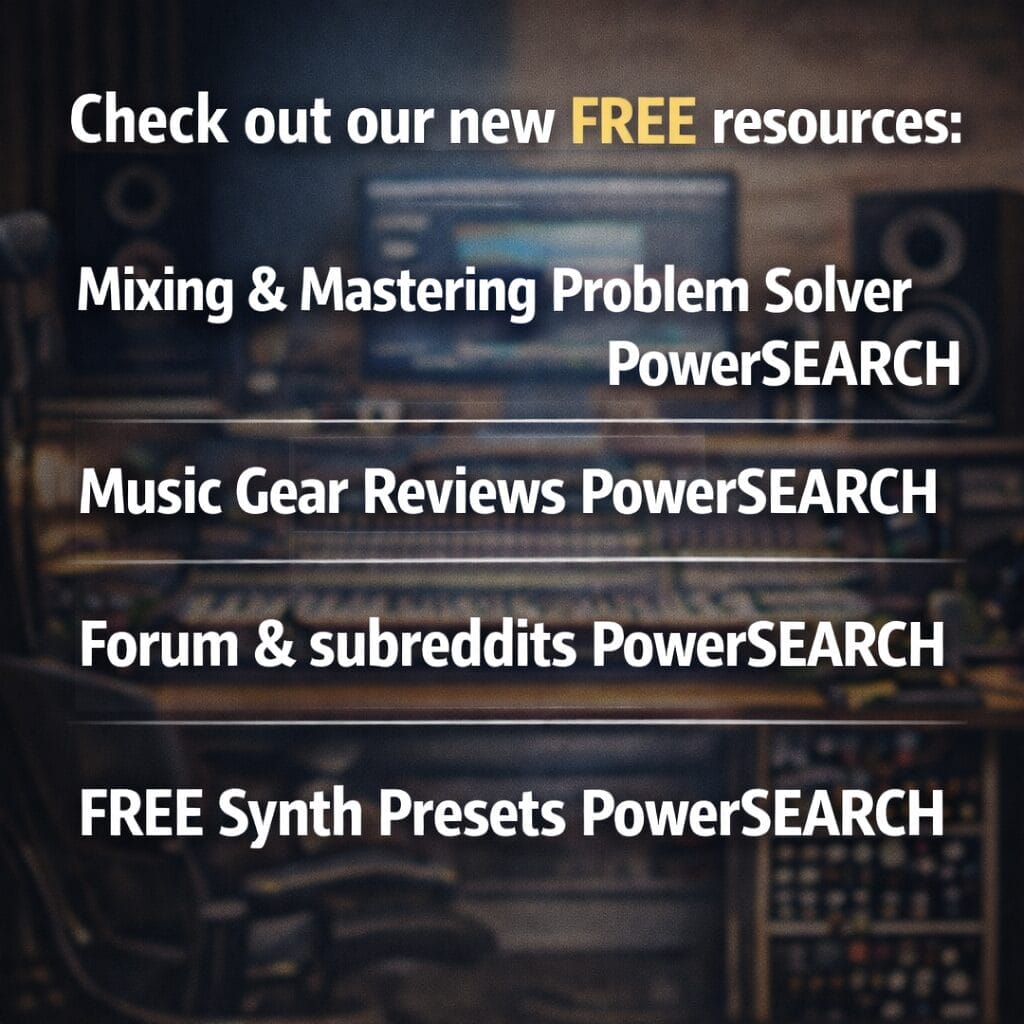
Introducing LinkedMusicians PowerSEARCH Tools
To help producers cut through the noise, LinkedMusicians is launching two tools designed to surface credible, user‑focused information — without the influencer distortion.
1. Music Gear Reviews PowerSEARCH
A custom Google search engine that pulls results only from trusted journalist sources.
If you want unbiased, editorially reviewed information, this is the fastest way to get it.
2. Forums + Subreddits PowerSEARCH
A second custom engine that focuses on real user experiences across:
- LinkedMusicians
- KVR
- Gearspace
- VI-Control
- Key audio production subreddits
This tool helps you see what actual users — with all the caveats about bias and disclosure — are saying about plugins, DAWs, sample libraries, virtual instruments, and more. For forums and social platforms, no AI can reliably separate genuine users from undisclosed promoters — which is why human discernment still matters, so that remains critical. This tool just helps you get a wide view of user opinion across various platforms very quickly.
Together, these tools give you a clearer, more trustworthy picture of the products you rely on to make music.



Comments0